
CELEBRITY
WHY DID PRESIDENT TRUMP LAUNCH AIRSTRIKES ON VENEZUELA AND CAPTURE MADURO? This was not a sudden move. This operation traces back more than 25 years of escalation, indictments, and pressure. Do you see this as justice… or a dangerous precedent? Drop your take. Share this. The debate is just beginning. Here’s why this happened 👇

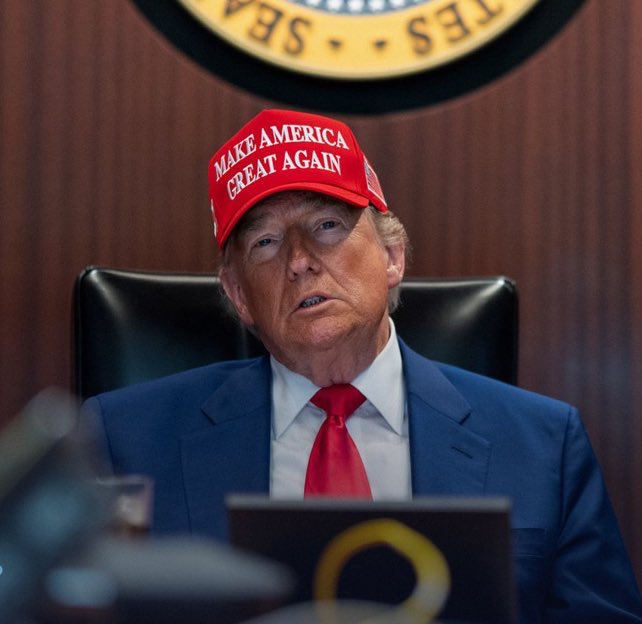
This was not a sudden decision.
It was the culmination of more than two decades of escalating confrontation, intelligence gathering, legal indictments, and geopolitical pressure.
To understand why this happened, you must understand what Venezuela became in U.S. strategic thinking — and how Maduro moved from president to target.
Here’s the full breakdown 👇
1️⃣ THE CONFLICT DIDN’T START WITH TRUMP
The U.S.–Venezuela standoff began long before Donald Trump entered politics.
In the late 1990s:
Hugo Chávez rose to power on an anti-U.S. platform
Venezuela rejected U.S. influence in Latin America
The country aligned with Cuba and openly challenged Washington
By the early 2000s, Venezuela was no longer viewed as a difficult partner — but as an ideological and strategic adversary.
2️⃣ FROM IDEOLOGICAL THREAT TO SECURITY CONCERN
As the years passed, U.S. intelligence agencies increasingly described Venezuela as more than a political problem.
Allegations began to surface involving:
Drug trafficking routes through Venezuelan territory
Money laundering networks
Ties between senior officials and transnational criminal groups
Alleged cooperation with U.S.-designated terrorist organizations
Whether proven or disputed, these accusations reshaped U.S. policy thinking.
Venezuela was no longer treated as a sovereign disagreement — but as a security risk.
3️⃣ MADURO BECAME THE CENTER OF THE STORM
When Nicolás Maduro took power after Chávez’s death, pressure intensified dramatically.
Under Maduro:
Economic collapse accelerated
Millions fled the country
Political opposition was crushed
International isolation deepened
U.S. prosecutors later announced indictments against Maduro and senior officials, accusing them of operating a “narco-state.”
From Washington’s perspective, Maduro was no longer just a president — he was personally named in criminal cases.
4️⃣ THE FAILURE OF SANCTIONS
The U.S. initially relied on:
Economic sanctions
Diplomatic isolation
Recognition of alternative leadership
The goal was simple: force Maduro out without military action.
But it failed.
Despite sanctions:
Maduro retained control of the military
Russia, China, and Iran provided support
Black-market systems replaced formal trade
Inside U.S. policy circles, sanctions were increasingly viewed as exhausted leverage.
5️⃣ THE “CARTEL STATE” LABEL CHANGED THE RULES
This was the turning point.
U.S. officials began publicly framing Venezuela as a criminal enterprise, not a legitimate state actor.
Why that matters:
Criminal organizations are treated differently under U.S. law
Capture missions can be framed as law enforcement, not war
Sovereignty arguments weaken under counter-narcotics and counter-terror doctrines
Once this label took hold, military action became legally and politically easier to justify inside the U.S. system.
6️⃣ TRUMP’S STRATEGIC STYLE
Donald Trump’s foreign-policy pattern is consistent:
He favors decisive force over prolonged negotiation
He prefers unpredictable timing
He acts when he believes deterrence has failed
From ISIS leaders to Iran’s Soleimani, Trump’s approach has been:
Wait quietly — then strike fast.
Venezuela fit that pattern.
7️⃣ WHY ACTION HAPPENED WHEN IT DID
According to strategic analysis, several factors likely converged:
Intelligence windows reportedly narrowed
Regional instability increased
Legal cases matured to operational readiness
Political calculations shifted toward action
In high-risk operations, delay itself becomes a danger.
8️⃣ THIS WAS ABOUT MORE THAN MADURO
The operation sent a message far beyond Venezuela.
To rivals and adversaries, the signal was clear:
Time does not erase indictments
Geography does not guarantee safety
Power protects no one indefinitely
Whether one views this as enforcement or escalation, it was a global signal.
9️⃣ THE INTERNATIONAL BACKLASH
Critics argue:
It violates international law
It undermines national sovereignty
It sets a dangerous precedent
Supporters argue:
Criminal leaders cannot hide behind state power
Law enforcement has no borders
Long-standing impunity invites instability
This divide now shapes global reaction.
🔚 FINAL ANALYSIS
This moment was not impulsive.
It was decades in the making.
A collision of:
Law
Power
Strategy
And unresolved geopolitical conflict
History will debate whether this was justice or overreach — but one thing is clear:
👉 This was not random. This was calculated.
👇👇👇
Do you see this as accountability… or a dangerous precedent?
Comment your view. Share this. The conversation is just beginning.

Trump FEARS PRISON as Court RUSHES Impeachment👈 We begin tonight with a growing political problem for Donald Trump that could seriously damage Republicans heading into the midterms. The traditional New Year’s Eve concert at the Kennedy Center has been canceled after the administration controversially renamed the venue to include Trump’s name—an action lawmakers say was illegal. Several artists have refused to perform, citing principles over profit. At the same time, Trump’s second term is increasingly defined by self-promotion and extravagance, from gilded White House renovations to massive vanity projects, even as Americans struggle with rising costs. But the real pressure is coming from Congress. Multiple articles of impeachment are now circulating, accusing Trump of obstruction of justice, abuse of power, corruption, violations of constitutional rights, and even tyranny. Lawmakers are focusing on his threats to jail political opponents, defiance of court orders, and attempts to weaponize the Justice Department. Legal experts warn that even if Trump avoids removal now, the Senate could still hold an impeachment trial after he leaves office—potentially opening the door to criminal prosecution. For Trump, this is no longer just political theater. The legal stakes are real, and rising fast👉 Do you believe Trump will actually face jail time? Sound off below!⤵️

👶 Connor McDavid and his wife, Lauren Kyle, have just sent shockwaves across social media with a surprise no one saw coming — they’re officially parents. But it wasn’t only the arrival of their first child that set the internet buzzing; it was the name they chose that truly stole hearts. For nine months, the couple stayed completely out of the spotlight. No hints. No leaks. Total privacy. Then, on a calm morning in Canada, everything changed. One simple photo appeared online. A tiny newborn, resting peacefully in Lauren Kyle’s arms. Connor McDavid beside her, smiling with a quiet joy that said everything. And while the image was undeniably beautiful, what moved people most wasn’t just the moment 🥰 It was the baby’s name… Read full 👇

💥 BREAKING NEWS: Trump Faces Possible Jail as Congress Unveils Seven Impeachment Articles In a dramatic and far-reaching move, Congress has introduced seven articles of impeachment against former President Donald Trump, igniting what many are calling one of the most consequential political and legal confrontations in modern American history. Lawmakers argue the charges reveal a long-running pattern of misconduct, accusing Trump of actions that undermine democratic norms and challenge the very foundation of the rule of law. But the battle does not end on Capitol Hill. Trump’s legal exposure is rapidly expanding as multiple criminal investigations gain momentum across several jurisdictions. Recent court filings, emerging witness testimony, and broadening probes are tightening the legal net, escalating pressure on all fronts. What once resembled fierce partisan conflict is now evolving into a serious legal reckoning, with the possibility of criminal charges—and even jail time—no longer theoretical but increasingly real. 🇺🇸 👇 Take a look at the legal risks Trump is facing that could land him in prison—sending shockwaves through Washington. Full story 👇

🔥5 MIN AGO: Trump LOSES Control of Mar-a-Lago After Court Seizure Order | Buffett Responds👈 Donald Trump is facing what legal experts are calling the most serious financial crisis of his life. A federal judge has issued an emergency order seizing operational control of Mar-a-Lago, citing years of alleged financial fraud. Prosecutors say Trump massively inflated the property’s value to secure loans, while dramatically undervaluing it for tax purposes — a pattern they claim violates federal banking laws. Federal marshals are now on site, a court-appointed receiver is in control, and Trump can no longer use the property for political or fundraising events. This is a devastating blow to both his finances and his political image. Adding to the shock, Warren Buffett broke his long silence, saying, “When you build a business on deception, the bill eventually comes due.” He revealed Berkshire Hathaway once reviewed Trump’s books and walked away, calling the numbers unrealistic. With donors pulling back, banks cooperating, and judges using unusually harsh language, this isn’t just about one property — it could mark the unraveling of Trump’s entire business empire and reshape the 2024 political landscape WHAT DO YOU THINK? Is this the beginning of a larger unraveling — or a politically charged legal battle?👉 SEE DETAILS

Dear Mr President Donald J. Trump Donald J. Trump We the People of the United States demand the arrest of Hakeem Jeffries for treason. His actions by contacting Venezuela even though it was too late could have cost the lives of our men and women that were involved in this mission. By law this is treason when you turn on your government. ARREST HIM ASAP!!!!!

1 MIN AGO: Trump’s Lawyers REMOVED From Court After Explosive Federal Meltdown | George Will👈 Donald Trump’s legal team was dramatically ejected from a federal courtroom after an explosive meltdown that stunned legal observers. The incident was triggered when prosecutors introduced an email that Trump’s attorneys had previously sworn under oath did not exist. When confronted with proof that the email had, in fact, been produced months earlier—and even cited in the defense’s own filings—Trump’s lead attorney accused prosecutors of fabricating evidence and claimed the judge was complicit. Rather than correcting the record, the attorney doubled down, refused the judge’s direct orders to sit down, and continued shouting accusations of corruption. The judge held him in contempt and ordered federal marshals to remove him. A second Trump attorney joined the outburst and was also escorted out. Legal experts say this behavior—making demonstrably false statements, accusing prosecutors of crimes without evidence, and defying a judge—could lead to disbarment, sanctions, or criminal contempt charges. The fallout is severe: Trump is now left mid-trial with an unprepared junior attorney, his defense strategy in ruins, and jurors having witnessed his lawyers being removed for misconduct. Legal analysts across the spectrum are calling this career-ending conduct and one of the most damaging self-inflicted disasters a defense team can suffer in a criminal trial👉 WATCH what just destroyed his defense 👉 DO YOU THINK THIS MOMENT JUST CHANGED THE ENTIRE TRIAL? 👉 SHARE this before it disappears 👉 COMMENT if you believe this was a legal disaster—or a calculated gamble

HOT UNDATED Impeachment Discussions Intensify in Capitol Hill as Lawmakers Accuse Donald Trump of Unlawful Use of Military Force and Detention of a Foreign Leader of a sovereign nation Without Congressional Consent after Military Action in Venezuela and capture of Maduro THIS COULD END A PRESIDENCY. Lawmakers say Trump crossed a constitutional red line — and impeachment talks are exploding behind closed doors. What REALLY happened in Venezuela is far worse than reported. Click before this gets buried.👉 Click to uncover what they’re not telling you ⤵️ ⤵️

Greenland SLAMS the Door on the U.S., BLOCKS $3 BILLION Deal With Canada — Trump Left STUNNEDA stunning geopolitical twist has unfolded as Greenland abruptly shuts the United States out of a massive $3 billion agreement tied to Canada, delivering a blow no one in Washington anticipated. What was once assumed to be a shared strategic opportunity has instead turned into a sharp exclusion, with Greenland asserting its authority and redrawing the lines of influence in the Arctic. Insiders say the decision landed like a thunderclap — especially for Trump, who never expected to be sidelined so decisively.The fallout is already rippling across diplomatic and economic circles. Analysts warn the move signals a dangerous shift in Arctic power dynamics, strengthening Canada’s position while exposing cracks in U.S. leverage. As Trump reacts with visible shock, critics argue this moment underscores a larger reality: allies and territories once thought firmly aligned with Washington are increasingly willing to say no — and mean it Find out who’s really in control now👉 Do you think the U.S. miscalculated its Arctic strategy? 👉 Is this the beginning of a major power shift in the north? 💬 Drop your thoughts below, share this story, and stay informed — because the Arctic just got a lot hotter⤵️

BREAKING — The U.S. Supreme Court, through its Public Information Office, just issued a rare public statement that’s rocking W@sh!ngt0n. The Court says D0n@ld Tr@mp’s military action in V@nezuel@ and the arrest of M@dur0 were carried out without Congressional approval, violating Article I, Section 8 and the War Powers Acts. Sources say the move is being labeled illegal and impeachable, with a swift investigation now ordered👉 Do you believe a president can order military action without Congress? 👉 Is this a constitutional crisis—or a justified decision? 👉 See the shocking statement rocking W@sh!ngt0n NOW⤵️

🇺🇸 MADURO TELLS U.S. JUDGE: “I WAS CAPTURED AT MY HOME IN CARACAS” Maduro told a federal judge in New York that he was seized from his home in Caracas (the capital), previewing a legal strategy centered on alleged illegal abduction. His defense is expected to argue the arrest violated international law, though U.S. courts have rejected similar claims in past cases. The judge warned Maduro against speaking further, noting there would be a time to address those arguments later. Nicolás Maduro: “I was captured at my home in Caracas, Venezuela.” Judge Alvin Hellerstein: “There will be a time and a place to go into all of this.”👉 “Do you believe this arrest was legal?Do you think this arrest violated international law — or is this just a last-ditch defense strategy? Comment below!”⤵️

JUST IN: Jack Smith Deposition Reveals Key Evidence Linking Trump to January 6 Riot New details from Jack Smith’s closed-door deposition highlight what may be the most consequential evidence yet regarding Donald Trump’s role in the January 6, 2021 Capitol attack. Smith revealed that Trump received calls from trusted individuals during the riot but still refused to act to protect the Capitol. According to Smith, that inaction is central to establishing criminal intent. He also stated investigators had proof beyond a reasonable doubt that Trump engaged in efforts to overturn the 2020 election and obstruct justice. Smith emphasized he would pursue charges against any former president, regardless of party affiliation. The deposition further exposed Trump’s phone communications during the chaos at the Capitol. In the aftermath, political analysts say the fallout could accelerate calls for accountability following the midterms. Attention is now turning to what legal and political steps may come next 👉 See the evidence shaking Washington
