
CELEBRITY
Breaking New: The U.S. Senate has voted to block President Donald Trump from using military force against Venezuela. In a 52 to 47 vote, senators passed a measure that prevents the president from taking unilateral military action against the country….Find Out Which Measures Are Fueling the Fury… Full details reactions, and what comes next ⤵️⤵️

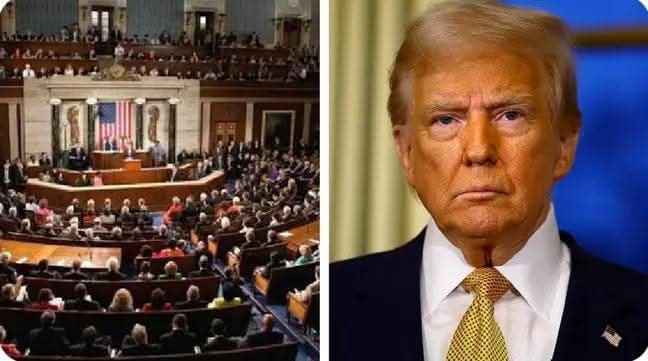
Washington has been thrown into political turmoil after the U.S. Senate voted 52–47 to block President Donald Trump from taking unilateral military action against Venezuela, marking one of the most dramatic congressional rebukes of presidential war powers in recent history.
The vote advanced a War Powers Resolution that would require the president to seek explicit congressional approval before launching or continuing military operations against Venezuela — effectively slamming the brakes on any solo military decision-making by the White House.
And behind the scenes, the fury is only growing.
🗳️ What the Senate Just Did — and Why It’s Huge
In a rare bipartisan move, several Republican senators broke ranks to join Democrats, pushing the measure forward by a narrow margin. The resolution does not immediately end all military activity, but it sends a powerful message:
👉 Congress is reasserting its constitutional authority over war and peace.
Lawmakers backing the resolution argue that the president cannot drag the U.S. into another foreign conflict without congressional consent, especially in a region as volatile as Latin America.
“This is about checks and balances,” one senior senator said. “No president — Republican or Democrat — should have unchecked power to launch military action.”
🔥 What’s Fueling the Fury in Washington
Several explosive issues pushed the Senate to act:
1️⃣ Fear of Unilateral War
Lawmakers across both parties were alarmed by reports that the administration was exploring expanded military options against Venezuela, raising fears of escalation without debate or authorization.
2️⃣ War Powers and the Constitution
The U.S. Constitution gives Congress — not the president — the authority to declare war. Senators argue that allowing unilateral action would dangerously weaken that foundation.
3️⃣ Republican Party Fractures
The vote exposed deep divisions within the GOP, with some Republicans accusing Trump of overreach while others accuse defectors of undermining national security.
4️⃣ “Another Endless Conflict” Anxiety
After decades of U.S. involvement in long foreign wars, many lawmakers say voters are tired of conflicts with no clear exit strategy.
🇺🇸 Trump’s Reaction: Anger and Defiance
President Trump reacted swiftly and angrily, blasting the vote as a threat to national security and accusing senators of “tying the hands of the commander-in-chief.”
White House allies insist the resolution weakens America’s ability to respond quickly to threats and emboldens adversaries. Trump has also signaled he would veto the measure if it reaches his desk.
⚖️ What Happens Next
Here’s what to watch closely:
🔹 Final Senate Vote: The resolution must pass a final vote.
🔹 House Showdown: It must also clear the House of Representatives — a major hurdle.
🔹 Potential Veto: Trump is expected to veto it, meaning Congress would need a two-thirds majority to override — a tall order.
Even if it doesn’t become law, experts say the vote is symbolically powerful and could reshape how future presidents approach military decisions.
🌍 Why This Matters Beyond Washington
This isn’t just about Venezuela — it’s about who controls America’s war powers.
The outcome could:
Set a precedent limiting future presidents
Influence U.S. foreign policy in Latin America
Reignite national debate over executive power and democratic oversight
Supporters call it a victory for democracy. Critics warn it could weaken U.S. global influence.
🧠 Bottom Line
The Senate’s 52–47 vote has ignited a political firestorm, exposed cracks within both parties, and reopened one of the oldest debates in American politics:
Should one person have the power to take the nation to war?
🔥 The battle is far from over.
👉 Full details, reactions, and what comes next below ⤵️⤵️

5 MIN AGO: CANADA’S UNEXPECTED $262 MILLION RAILWAY MOVE BYPASSES U.S. PORTS — TRUMP SHOCKED Canada has just rolled out a surprise $262M railway investment that is now rerouting trade flows around U.S. ports, catching Washington completely off guard. Sources say the move fast-tracks cross-continental rail links, allowing goods to move directly from Canadian hubs to global markets without touching American infrastructure. Analysts warn this isn’t just a transport upgrade — it’s a strategic trade realignment that could drain revenue, jobs, and leverage from key U.S. ports. Insiders say Trump was stunned by how quickly Canada acted — and how little the U.S. can do to reverse it. 👇 Why this railway decision matters far beyond logistics is now sending shockwaves through political and economic circles.full details ⤵️

Melania Trump BEGS for Judge Cannon to BAIL HER OUT — It’s NOT Going to Work⚡. Melania Trump just made a move that screams desperation. She’s being sued by journalist Michael Wolff over his reporting on her alleged connections to Jeffrey Epstein. Instead of calmly disputing the claims, Melania threatened Wolff with a $1 billion defamation lawsuit—a classic intimidation tactic meant to silence a journalist. Wolff didn’t back down. He countersued in New York, where strong anti-SLAPP laws exist to stop powerful people from abusing the courts to shut critics up. That’s when things got awkward. Melania reportedly spent months dodging service, literally avoiding being served court papers. And now, she’s trying to get the case thrown out or moved to Florida—a clear attempt at forum shopping. Why Florida? Because that’s where Trump-appointed Judge Aileen Cannon sits, the same judge who dismissed Donald Trump’s classified documents case. But legal experts say this won’t work. Melania chose New York. The jurisdiction argument is weak. And judges don’t reward people who run from the courts. If this stays in New York, discovery begins—and that’s exactly what Melania seems desperate to avoid 👇Do you think Melania’s Florida gamble will work — or is this the beginning of a legal nightmare?👉 Read the legal bombshell unfolding now⤵️

Breaking New: The U.S. Senate has voted to block President Donald Trump from using military force against Venezuela. In a 52 to 47 vote, senators passed a measure that prevents the president from taking unilateral military action against the country….Find Out Which Measures Are Fueling the Fury… Full details reactions, and what comes next ⤵️⤵️

BREAKING NEWS:Taylor Swift Tears Into Donald Trump After White House Files Lawsuit Against NBC Over SNL Mockery, Says the President Should “Worry About the Government Shutdown, Epstein Files, and Rising Food Prices” Instead of Comedy Sketches…Full details ⤵️

JUST IN: CANADA’S CRITICAL MINERAL DEAL LOCKS THE U.S. OUT OF A $400 BILLION EV MARKET — TRUMP SHOCKED Canada has just sealed a critical minerals deal that is now cutting the United States out of a $400B electric-vehicle supply chain, sending shockwaves through Washington. Insiders say the agreement secures long-term access to lithium, nickel, and rare earths for partners abroad, while U.S. automakers and battery producers are left scrambling. Analysts warn this isn’t a temporary setback — it’s a strategic realignment that could determine who dominates the EV race for the next decade. Sources claim Trump was caught completely off guard, as leverage slipped away faster than anyone expected. 👇 How Canada pulled this off — and why the U.S. has no easy response — is now triggering panic across political and industrial circles. Why America has no easy way out… read now ⤵️⤵️

🔥 ARIZONA POLITICAL EARTHQUAKE: Trump-backed Republicans suffer a stunning late-night defeat, triggering GOP panic and fueling talk of a Democratic blue wave ⚡ A major upset just rocked the Grand Canyon State. In a tightly watched special congressional election, a Trump-endorsed Republican was soundly defeated, undone by a 17-point Democratic swing in a district Trump carried by 22 points just last year. Stunned GOP insiders were reportedly left reeling, with operatives exclaiming, “We lost by HOW much?” The midnight ballot drop detonated online almost instantly. #GOPMeltdown surged to the top of global trends as MAGA supporters reacted in disbelief and Democrats celebrated what many see as the strongest warning sign yet ahead of the 2026 midterms. Sources say Trump erupted during a late-night war-room call, blasting “RINO traitors” and demanding answers, with whispers that the loss could spark an internal party purge. Meanwhile, chaotic concession clips are spreading rapidly online — outrunning spin efforts and locking in the narrative. What happened in the desert tonight may mark one of the GOP’s most serious reckonings in years. Do you think this is the start of a blue wave — or a one-off shock? 👇 Full breakdown and the viral concession footage 👇👇

BREAKING: Tension is surging on Capitol Hill tonight as reports emerge that panic is spreading among members of Congress👉 What do YOU think is causing the panic?See what’s unfolding LIVE⤵️

🔥 BREAKING: Taylor Swift TORCHES Trump After U.S. Citizen Killed in Massive ICE Operation — 2,000 Federal Agents Involved👉 How did a large federal operation end with the death of an American citizen—and who will be held accountable?What really happened in Minneapolis will shock you — See now⤵️

JUST IN: Trump PANICS as Federal Marshals SEIZE ICONIC Properties — Power COLLAPSES Overnight Washington is in shock after federal marshals moved to seize multiple iconic properties, triggering panic behind the scenes and sending a chilling signal across Trump’s political and financial empire. According to multiple reports, the sudden enforcement action caught allies off guard, with emergency meetings erupting as officials scrambled to contain the fallout. Legal analysts warn the seizures represent a dramatic escalation — transforming legal pressure into visible, irreversible consequences. Sources say the move struck at the very symbols of power Trump once used to project dominance, fueling comparisons to historic collapses where influence evaporated in real time. As images and details spread, insiders describe a frantic scramble to respond. With authority challenged, assets frozen, and the situation rapidly unfolding, Washington is bracing for the next shock — and the fallout may be immediate.📌 What this means next will shock you 👉 Read the full breakdown before⤵️

🔴 SAD NEWS: Connor McDavid, the 28-year-old hockey superstar, is making headlines with an emotional announcement from his wife, Lauren Kyle: “Connor is exhausted. He’s still trying to keep smiling, but we’re in a fragile phase.” An icon who has dedicated his entire life to hockey, leadership, and pushing the limits of performance with an indomitable spirit, is reportedly under 24/7 medical supervision surrounded by family and close friends. All because of his deteriorating health after years of relentless training and competition? It’s a devastating blow to fans worldwide, and Lauren felt she couldn’t stay silent any longer. The ripple effect is immediate: Connor McDavid himself has broken his silence with a powerful message, pushing the sports world to the brink of tears…⤵️

5 MIN AGO: Trump LOSES CONTROL of Mar-a-Lago After a Court SEIZURE ORDER — His Reaction Left the Courtroom Stunned! Do you think this ruling will stand — or get overturned? ▶️ Watch the full moment⤵️
