
CELEBRITY
5 MINS AGO: T.R.U.M.P REPORTEDLY HUMILIATED as JAPAN PICKS CANADA in STUNNING BILLION-DOLLAR TRADE SHIFT — KEY ALLY’S MOVE Might EXPOSE His POLICY BLUNDERS in a BREWING GLOBAL POWER SCANDAL That’s Leaving WASHINGTON SCRAMBLING! In a shocking turn that’s got international insiders buzzing with whispers, what started as T.r.u.m.p’s aggressive trade policies — pushing tariffs and demands on allies like Japan — could be spectacularly backfiring, with reports suggesting Tokyo is quietly rerouting billions in supply chains toward Canada instead. Sources hint the decision wasn’t loud drama but a calculated pivot, spotlighting Canada as the “”trusted partner”” amid U.S. instability, while exposing vulnerabilities in American economic strategy that nobody fully anticipated. T.r.u.m.p is reportedly seething behind closed doors, ranting to aides about the “”betrayal,”” while dư luận erupts — business tycoons questioning his approach, with memes mocking the humiliation exploding online and trending across platforms as fans can’t believe the Asia-Pacific flip. Insiders claim one high-level diplomat whispered: “”Japan saw the chaos coming — but is this the start of more allies jumping ship?”” The full clip is going viral, sparking wild speculation over whether this trade snub truly reshapes relations and buries Trump’s playbook — the internet can’t stop talking about the potential fallout, watch before the details vanish in the spin!watch ⤵️

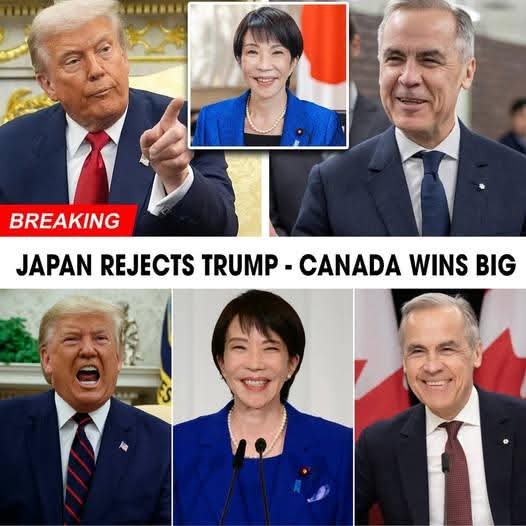
Over the past few days, a dramatic narrative has surged across social media: Japan has allegedly “snubbed” the United States, rerouting billions of dollars in trade toward Canada and exposing major flaws in Donald Trump’s trade strategy. Headlines speak of humiliation, betrayal, and a brewing global power scandal.
The story is gripping. It’s also misleading.
Yet dismissing it entirely would be a mistake — because while the viral version isn’t factually supported, the forces behind the rumor are very real and point to a deeper transformation underway in global trade.
This explains why this narrative went viral, and explores what it actually reveals about the state of international economic trust.
The Viral Claim: A Sudden, Stunning Trade Betrayal
According to viral clips and posts:
Japan, frustrated with U.S. tariffs and political volatility, has “chosen Canada” as a preferred trade partner
A billion-dollar supply-chain shift allegedly took place behind closed doors
Donald Trump is said to be furious, while Washington scrambles to contain diplomatic fallout
The move supposedly signals that key allies are abandoning U.S. leadership
This framing suggests a dramatic geopolitical turning point.
There is no credible evidence that such a sudden or formal trade switch has occurred.
No official announcement from Japan.
No confirmed treaty.
No verified government or corporate disclosure backing the claim.
So why is the story resonating so strongly?
What’s Actually Happening: Quiet Shifts, Not Loud Breakups
1. Supply Chains Are Diversifying — Everywhere
Global companies and governments are spreading risk, not “picking sides.” This trend accelerated due to:
U.S. tariffs
COVID-era disruptions
Geopolitical tensions
Rising costs of over-concentration in any single country
Japan, like many nations, is diversifying logistics, sourcing, and investment locations — including Canada, Mexico, Southeast Asia, and Europe.
That’s not a betrayal.
It’s risk management.
2. U.S. Trade Policy Has Increased Uncertainty
Trump’s trade approach emphasized:
Tariffs as leverage
Public pressure on allies
Transactional, short-term negotiation tactics
While this strategy did extract concessions in some cases, it also created:
Policy unpredictability
Long-term planning challenges for multinational firms
Incentives for partners to seek alternative pathways
The result?
Not rejection — but hedging.
3. Canada’s Role: Stability, Not Supremacy
Canada has benefited from:
Trade predictability
Fewer sudden tariff shocks
Strong regulatory alignment with G7 partners
That makes Canada attractive as one node in a diversified supply network — not a replacement for the U.S., but a complement.
The viral claim exaggerates this reality into a zero-sum drama.
Why the Story Still Matters (Even If It’s Overblown)
Here’s the critical point:
Narratives don’t go viral unless they touch a nerve.
This one resonates because it reflects growing anxiety about:
Whether the U.S. is still seen as a reliable long-term partner
How much unpredictability allies are willing to tolerate
The erosion of trust in global leadership consistency
Even exaggerated stories can shape perception — and perception influences markets, investment, and diplomacy.
The Trust Factor: The Real Currency of Trade
Modern trade isn’t just about tariffs or numbers. It’s about:
Predictability
Institutional stability
Confidence in future policy
When trust weakens:
Companies diversify faster
Allies rely less on verbal assurances
Long-term investments slow or move elsewhere
No dramatic “snub” is required for influence to decline.
It happens quietly.
Did Trump’s Trade Strategy “Fail”?
That depends on the metric.
Short-term leverage?
✔ Sometimes effective
Long-term confidence?
⚠ Mixed results
Trump’s approach challenged old norms and forced renegotiations, but it also:
Increased volatility
Encouraged contingency planning among allies
Reduced willingness to fully depend on U.S. policy continuity
This doesn’t mean allies are “jumping ship.”
It means they’re building lifeboats.
The Bigger Picture: Fragmentation, Not Collapse
What we are witnessing globally is not a dramatic power flip — but fragmentation:
More regional trade networks
More redundancy
Less dependence on any single superpower
This trend would exist regardless of who is president, but aggressive trade tactics accelerate it.
Final Takeaway
The viral story of Japan “choosing Canada over the U.S.” is not supported by verified evidence.
But the reaction to it reveals something important:
In today’s global economy, trust erodes faster than alliances break — and once confidence fades, it doesn’t need a press conference to change behavior.
This isn’t a humiliation story.
It’s a warning about how quietly influence can slip when stability disappears.
Want This Repurposed?
I can adapt this into:
🎥 A YouTube documentary script
📱 A TikTok / Reel breakdown
📰 A newsroom-style investigative article
🗳️ A political op-ed (pro-Trump, anti-Trump, or neutral)
📈 An SEO-optimized blog post

5 MINS AGO: T.R.U.M.P REPORTEDLY HUMILIATED as JAPAN PICKS CANADA in STUNNING BILLION-DOLLAR TRADE SHIFT — KEY ALLY’S MOVE Might EXPOSE His POLICY BLUNDERS in a BREWING GLOBAL POWER SCANDAL That’s Leaving WASHINGTON SCRAMBLING! In a shocking turn that’s got international insiders buzzing with whispers, what started as T.r.u.m.p’s aggressive trade policies — pushing tariffs and demands on allies like Japan — could be spectacularly backfiring, with reports suggesting Tokyo is quietly rerouting billions in supply chains toward Canada instead. Sources hint the decision wasn’t loud drama but a calculated pivot, spotlighting Canada as the “”trusted partner”” amid U.S. instability, while exposing vulnerabilities in American economic strategy that nobody fully anticipated. T.r.u.m.p is reportedly seething behind closed doors, ranting to aides about the “”betrayal,”” while dư luận erupts — business tycoons questioning his approach, with memes mocking the humiliation exploding online and trending across platforms as fans can’t believe the Asia-Pacific flip. Insiders claim one high-level diplomat whispered: “”Japan saw the chaos coming — but is this the start of more allies jumping ship?”” The full clip is going viral, sparking wild speculation over whether this trade snub truly reshapes relations and buries Trump’s playbook — the internet can’t stop talking about the potential fallout, watch before the details vanish in the spin!watch ⤵️

25 MINUTES AGO: THE TRUTH IS FINALLY OUT — THE NATION MAY NEVER BE THE SAME AGAIN Jack Smith UNLEASHES UNDENIABLE Evidence and everything he has on Trump, including videotapes of his own testimony before the House Judiciary Committee about Trump that were previously redacted, placing Trump in immediate legal jeopardy. Trump appeared in court and was quickly rushed out after being surrounded by an angry and pained mob. Trump now faces the risk of being physically removed from power after Jack Smith revealed proof of selling secrets to enemies, among many other allegations. Amid a wave of brutal purges and retaliations targeting legal teams, the former special counsel laid bare a stark reality surrounding secret files at Mar-a-Lago — materials he insists reveal a systematic scheme of interference, not a mere record-keeping mistake. But one disturbing revelation Jack Smith disclosed has now surfaced — something so serious that even Trump’s own supporters don’t know what to do next: the reason…See more details ⤵️

Sweet Revenge! William Drops DNA Bombshell on Meghan Markle’s Third Child: “It’s Not Harry’s — The Real Father Is…” 👇👇

BREAKING NEWS!!! Elon Musk just said Trump wouldn’t even stand a chance at winning the election without him. And get this—he also dropped a bomb saying Trump’s is…

“With a Heavy Heart, My Family Is Devastated to Announce… Harry Has…” — Meghan Chokes Up Delivering Heartbreaking News to the Royal Family About Harry in the U.S.: “My Husband Has…” See more below 👇👇👇

WATCH Taylor Swift and Travis Kelce’s Dance moves at the Wedding of Taylor Swift’s Close Friend that Fans can’t get over with… See Video
30 Minutes Ago Elon musk revealed That Trump Just Did the Most Corrupt Thing Any President Has Ever Done… FULL DETAILS 👇

Shocking Scene: “Meghan Fall Fuels “Fake Bump” Frenzy! She Stumbled — And The Internet Exploded. Meghan Markle’s Fall On A Public Street Is Sparking Wild Claims After Something Appeared To Shift Under Her Dress. Was It Just A Slip… Or Something Deeper? Bumpgate Is Trending”— See What Really Happened Below

TRAGEDY NEWS: 10 minutes ago The British Royal Family decided to announce the saddest news that made fans cry: “Prince William confirmed that his wife… See more below 👇👇👇

Sweet Revenge! William Drops DNA Bombshell on Meghan Markle’s Third Child: “It’s Not Harry’s — The Real Father Is…” 👇👇

JUST IN!The Royal Children Reunite: Prince George beams with joy as Lilibet and Archie return to the Palace — but Archie’s hair reveals the shocking truth about his real father… See More Below 👇👇👇
