
CELEBRITY
🇺🇸 MADURO TELLS U.S. JUDGE: “I WAS CAPTURED AT MY HOME IN CARACAS” Maduro told a federal judge in New York that he was seized from his home in Caracas (the capital), previewing a legal strategy centered on alleged illegal abduction. His defense is expected to argue the arrest violated international law, though U.S. courts have rejected similar claims in past cases. The judge warned Maduro against speaking further, noting there would be a time to address those arguments later. Nicolás Maduro: “I was captured at my home in Caracas, Venezuela.” Judge Alvin Hellerstein: “There will be a time and a place to go into all of this.”👉 “Do you believe this arrest was legal?Do you think this arrest violated international law — or is this just a last-ditch defense strategy? Comment below!”⤵️

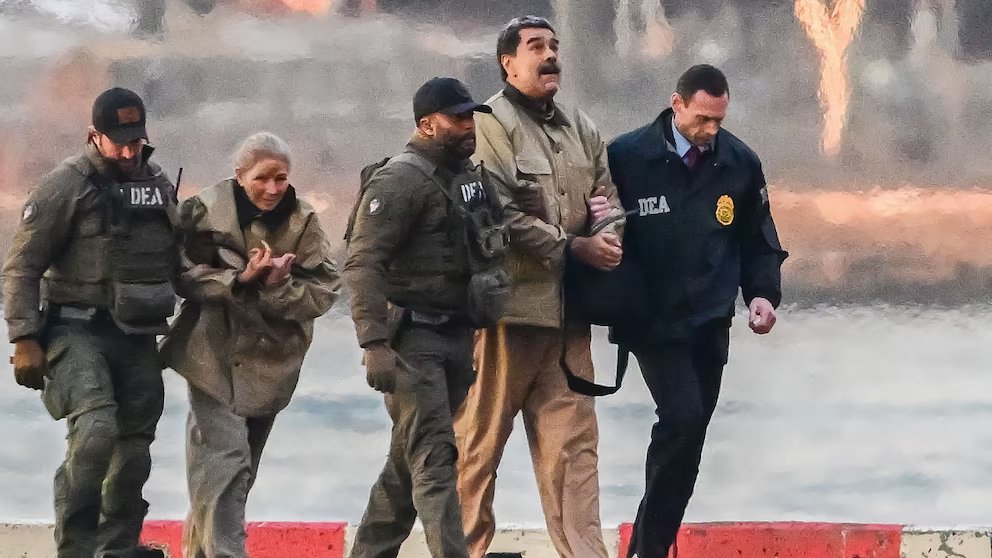
A tense moment unfolded in a federal courtroom in New York as Nicolás Maduro stunned observers with a dramatic claim that could redefine the case against him.
Speaking directly before U.S. District Judge Alvin Hellerstein, Maduro declared that he was “captured at my home in Caracas, Venezuela”, signaling that his defense team plans to challenge the legitimacy of his arrest on the grounds of illegal abduction.
“I was captured at my home in Caracas, Venezuela,” Maduro told the court.
The statement immediately set off alarm bells in legal and diplomatic circles. His lawyers are expected to argue that the arrest violated international law, potentially framing the case as an unlawful extraterritorial seizure rather than a legitimate prosecution.
⚖️ THE JUDGE SHUTS IT DOWN — FOR NOW
Judge Hellerstein swiftly intervened, warning Maduro against continuing to speak on the matter in open court.
“There will be a time and a place to go into all of this,” the judge said firmly.
The warning underscored the seriousness of the proceedings — and the court’s intent to keep tight control over how and when these explosive arguments are presented.
📌 WHY THIS MATTERS
This defense strategy is not new — and it’s rarely successful.
U.S. courts have consistently rejected similar claims in past high-profile cases, ruling that even controversial or forceful arrests do not automatically invalidate prosecution once a defendant is before the court.
Still, Maduro’s statement could:
Spark international backlash
Fuel political tensions between the U.S. and Venezuela
Become a rallying point for supporters who view the case as politically motivated
Raise new questions about sovereignty, extradition, and global law enforcement
🌍 A GLOBAL STAGE, NOT JUST A COURTROOM
This isn’t just a legal fight — it’s a geopolitical moment.
Maduro’s words appear carefully chosen, aimed not only at the judge, but at international audiences, allies, critics, and the court of public opinion. By framing his arrest as a “capture,” he positions himself as a victim of overreach rather than a defendant answering criminal charges.
Whether that narrative holds up in court remains to be seen.
🔍 WHAT COMES NEXT
The court is expected to formally hear arguments on the legality of the arrest at a later stage
Prosecutors are likely to counter with precedent showing such claims do not bar trial
Diplomatic reactions may intensify as the case moves forward
One thing is certain: this case just got far bigger than one man.
👉 Do you think this arrest violated international law — or is this just a last-ditch defense strategy?
💬 Drop your thoughts in the comments
🔁 Share this with someone following global politics
📌 Follow for real-time updates on this unfolding legal battle

BREAKING: Despite Russia deploying a submarine and warships to protect the oil tanker Bella 1, U.S. airborne forces began helicopter landings on the vessel minutes ago. Reports indicate U.S. forces have boarded and are attempting to seize a renamed Venezuelan oil tanker flying Russian flags, believed to be part of Russia’s so-called shadow fleet. The operation is unfolding in the North Sea, even as the tanker remains under Russian naval escort. And for Trump’s next trick? He’s about to make the left openly pro-Russia trying to explain why the U.S. shouldn’t stop a Russian shadow fleet from moving oil under fake flags…..Full details ⤵️

JUST IN: Carney’s STRONG Response to T.r.u.m.p After Latest Hostile Remarks Toward Canada. Following the latest pointed comments from Donald Trump on bilateral ties, Mark Carney moved quickly to articulate a clear and measured position. Rather than mirroring escalation, Ottawa emphasized international law, sovereignty, and multilateral restraint. The response was notable not for its volume, but for its precision — signaling boundaries without provoking confrontation. Canadian officials framed the moment as a test of norms rather than personalities, underscoring the risks of unilateral action in a volatile region. The message was calibrated for multiple audiences: allies, institutions, and markets alike. This was not an act of defiance, but of definition — clarifying where Canada stands as geopolitical pressure intensifies and expectations for middle powers grow sharper. Click to understand why Carney’s response carries weight far beyond hostile remarks toward Canada.1,6 giâyFast50 sources… Full details ⤵️

International Court Issues Trump Warrant — Unprecedented Legal Move That Brings Him to His Knees! In an unprecedented legal development, the International Criminal Court (ICC) has taken the extraordinary step of issuing a warrant for former President Donald Trump, marking a historic moment in both international law and American politics. The move, confirmed in official statements by the ICC, represents one of the most significant legal actions ever taken against a former U.S. president, with implications that could reverberate across the globe. What led to this shocking development? And what does it mean for Trump’s future? Millions of people are watching closely as the story unfolds…👉 What triggered this unprecedented move? ▶️ Watch the full moment⤵️

Kansas City Chiefs Announce: Hiring Homeless Residents to Clean Arrowhead Stadium After Every Weekend Game for $20 an Hour — Plus Hot Food and Drinks When the final whistle blows and tens of thousands of fans have left Arrowhead Stadium, you’d expect the place to fall silent… right? Not quite. Under the still-lit lights, a special group of people quietly step in — carrying brooms and trash bags, moving through aisles that were roaring just hours earlier. Many of them were once ignored, turned away, or forgotten by the world — but now, the Kansas City Chiefs are offering them an unexpected opportunity. So what really happens at Arrowhead after the games are over?📌 What do YOU think? Should more professional teams launch programs like this? 👇 Share your thoughts — and share this story if you believe opportunity matters more than ⤵️

Trump FEARS PRISON as Court RUSHES Impeachment👈 We begin tonight with a growing political problem for Donald Trump that could seriously damage Republicans heading into the midterms. The traditional New Year’s Eve concert at the Kennedy Center has been canceled after the administration controversially renamed the venue to include Trump’s name—an action lawmakers say was illegal. Several artists have refused to perform, citing principles over profit. At the same time, Trump’s second term is increasingly defined by self-promotion and extravagance, from gilded White House renovations to massive vanity projects, even as Americans struggle with rising costs. But the real pressure is coming from Congress. Multiple articles of impeachment are now circulating, accusing Trump of obstruction of justice, abuse of power, corruption, violations of constitutional rights, and even tyranny. Lawmakers are focusing on his threats to jail political opponents, defiance of court orders, and attempts to weaponize the Justice Department. Legal experts warn that even if Trump avoids removal now, the Senate could still hold an impeachment trial after he leaves office—potentially opening the door to criminal prosecution. For Trump, this is no longer just political theater. The legal stakes are real, and rising fast👉 Do you believe Trump will actually face jail time? Sound off below!⤵️

👶 Connor McDavid and his wife, Lauren Kyle, have just sent shockwaves across social media with a surprise no one saw coming — they’re officially parents. But it wasn’t only the arrival of their first child that set the internet buzzing; it was the name they chose that truly stole hearts. For nine months, the couple stayed completely out of the spotlight. No hints. No leaks. Total privacy. Then, on a calm morning in Canada, everything changed. One simple photo appeared online. A tiny newborn, resting peacefully in Lauren Kyle’s arms. Connor McDavid beside her, smiling with a quiet joy that said everything. And while the image was undeniably beautiful, what moved people most wasn’t just the moment 🥰 It was the baby’s name… Read full 👇

💥 BREAKING NEWS: Trump Faces Possible Jail as Congress Unveils Seven Impeachment Articles In a dramatic and far-reaching move, Congress has introduced seven articles of impeachment against former President Donald Trump, igniting what many are calling one of the most consequential political and legal confrontations in modern American history. Lawmakers argue the charges reveal a long-running pattern of misconduct, accusing Trump of actions that undermine democratic norms and challenge the very foundation of the rule of law. But the battle does not end on Capitol Hill. Trump’s legal exposure is rapidly expanding as multiple criminal investigations gain momentum across several jurisdictions. Recent court filings, emerging witness testimony, and broadening probes are tightening the legal net, escalating pressure on all fronts. What once resembled fierce partisan conflict is now evolving into a serious legal reckoning, with the possibility of criminal charges—and even jail time—no longer theoretical but increasingly real. 🇺🇸 👇 Take a look at the legal risks Trump is facing that could land him in prison—sending shockwaves through Washington. Full story 👇

🔥5 MIN AGO: Trump LOSES Control of Mar-a-Lago After Court Seizure Order | Buffett Responds👈 Donald Trump is facing what legal experts are calling the most serious financial crisis of his life. A federal judge has issued an emergency order seizing operational control of Mar-a-Lago, citing years of alleged financial fraud. Prosecutors say Trump massively inflated the property’s value to secure loans, while dramatically undervaluing it for tax purposes — a pattern they claim violates federal banking laws. Federal marshals are now on site, a court-appointed receiver is in control, and Trump can no longer use the property for political or fundraising events. This is a devastating blow to both his finances and his political image. Adding to the shock, Warren Buffett broke his long silence, saying, “When you build a business on deception, the bill eventually comes due.” He revealed Berkshire Hathaway once reviewed Trump’s books and walked away, calling the numbers unrealistic. With donors pulling back, banks cooperating, and judges using unusually harsh language, this isn’t just about one property — it could mark the unraveling of Trump’s entire business empire and reshape the 2024 political landscape WHAT DO YOU THINK? Is this the beginning of a larger unraveling — or a politically charged legal battle?👉 SEE DETAILS

Dear Mr President Donald J. Trump Donald J. Trump We the People of the United States demand the arrest of Hakeem Jeffries for treason. His actions by contacting Venezuela even though it was too late could have cost the lives of our men and women that were involved in this mission. By law this is treason when you turn on your government. ARREST HIM ASAP!!!!!

1 MIN AGO: Trump’s Lawyers REMOVED From Court After Explosive Federal Meltdown | George Will👈 Donald Trump’s legal team was dramatically ejected from a federal courtroom after an explosive meltdown that stunned legal observers. The incident was triggered when prosecutors introduced an email that Trump’s attorneys had previously sworn under oath did not exist. When confronted with proof that the email had, in fact, been produced months earlier—and even cited in the defense’s own filings—Trump’s lead attorney accused prosecutors of fabricating evidence and claimed the judge was complicit. Rather than correcting the record, the attorney doubled down, refused the judge’s direct orders to sit down, and continued shouting accusations of corruption. The judge held him in contempt and ordered federal marshals to remove him. A second Trump attorney joined the outburst and was also escorted out. Legal experts say this behavior—making demonstrably false statements, accusing prosecutors of crimes without evidence, and defying a judge—could lead to disbarment, sanctions, or criminal contempt charges. The fallout is severe: Trump is now left mid-trial with an unprepared junior attorney, his defense strategy in ruins, and jurors having witnessed his lawyers being removed for misconduct. Legal analysts across the spectrum are calling this career-ending conduct and one of the most damaging self-inflicted disasters a defense team can suffer in a criminal trial👉 WATCH what just destroyed his defense 👉 DO YOU THINK THIS MOMENT JUST CHANGED THE ENTIRE TRIAL? 👉 SHARE this before it disappears 👉 COMMENT if you believe this was a legal disaster—or a calculated gamble

HOT UNDATED Impeachment Discussions Intensify in Capitol Hill as Lawmakers Accuse Donald Trump of Unlawful Use of Military Force and Detention of a Foreign Leader of a sovereign nation Without Congressional Consent after Military Action in Venezuela and capture of Maduro THIS COULD END A PRESIDENCY. Lawmakers say Trump crossed a constitutional red line — and impeachment talks are exploding behind closed doors. What REALLY happened in Venezuela is far worse than reported. Click before this gets buried.👉 Click to uncover what they’re not telling you ⤵️ ⤵️
